⚡ The Essentials in 10 Seconds (TL;DR)
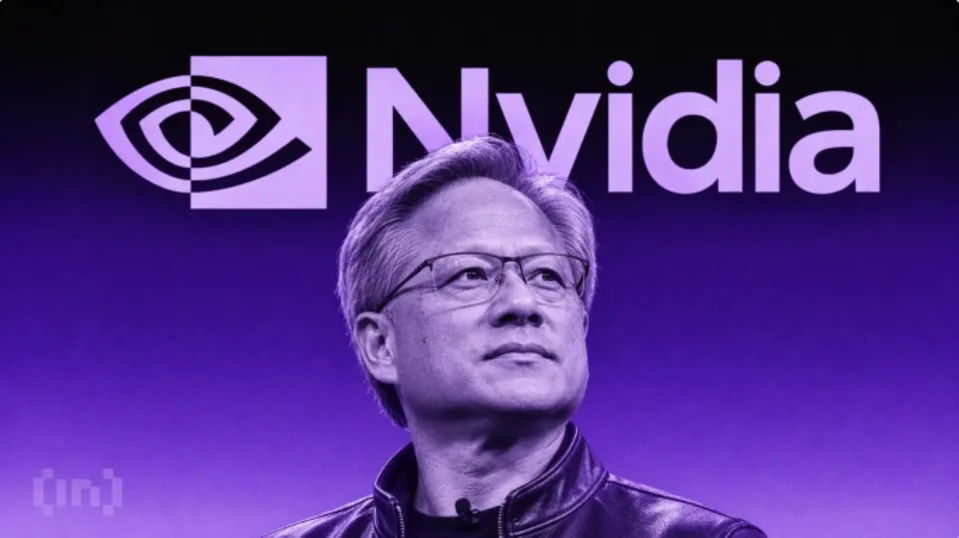
- Jensen Huang stepped down as head of Nvidia on November 12, 2026. Clément Delangue, the French co-founder of Hugging Face, vows to fight "harder than ever" for open-source AI.
- Nvidia's acquisition of Hugging Face, valued at $12.93 billion, has not closed yet. It is expected in the first half of 2027, pending regulatory approval.
- The platform's openness guarantees rested largely on Jensen Huang's personal commitment. Whether they hold is the first test for Nvidia's new leadership.
📖 The Hook
He championed open models, and now he's leaving. Jensen Huang's resignation, made official on November 12, 2026, comes just over two months after Nvidia announced its acquisition of Hugging Face. Clément Delangue responded on X: "This is a really sad day! But I want to be clear about one thing: we will keep fighting for open-source AI, harder than ever." The message is also aimed at the GPU giant's incoming leadership. Hugging Face claims more than 18 million developers, over three million models and more than 200,000 business users. Its direction therefore matters far beyond Silicon Valley. The question is simple: will the promise of an open platform outlive the man who made it?
💡 What Changes
For now, nothing concrete. Nvidia has announced no changes to the terms of the acquisition or to its commitments to Hugging Face. But the context has shifted. Jensen Huang had stated that "Nvidia compute will not be required to build on Hugging Face or deploy there." That pledge is not necessarily part of any contractual framework: the news report does not specify its legal standing.
For developers and businesses, especially in Europe, the stakes are operational. What matters is being able to keep downloading, customizing and deploying models on their own infrastructure, without relying on proprietary APIs or mandated hardware.
Three things to watch:
- The new leadership's first statements on open source. The news report does not name Huang's successor.
- The U.S. Department of Justice investigation, which is gathering information on the deal's impact on competition.
- The platform's terms of use once the deal closes.
If your production relies on Hugging Face, now is the time to make sure you can host your critical models elsewhere.
⚖️ Multi-Angle Analysis / Breakdown
- On one hand: openness serves Nvidia's business interests, regardless of who is in charge. Accessible models drive more applications, and therefore more demand for computing power. In July 2026, Nvidia was among 25 signatories of an open letter, alongside Microsoft, Meta, IBM and Hugging Face, urging Washington to avoid premature restrictions on open-weight models. The commitment thus has an institutional dimension, not just a personal one. Clément Delangue also argues the deal could benefit Europe, through reinvestment by founders and employees and a stronger Nvidia presence in France.
- On the other hand: a strategy driven by a founding leader can be redirected by a successor, especially after an acquisition this large. It is the second-biggest in Nvidia's history, behind the Groq assets ($20 billion in December 2025). Pressure to make $12.93 billion pay off could push the company to tie the platform more closely to its in-house hardware ecosystem. Moreover, the ongoing antitrust review shows that placing a key model-distribution player in the hands of the GPU market leader is already worrying regulators.
🔮 Outlook & Conclusion
The coming months will reveal whether open source was Jensen Huang's personal conviction or Nvidia's strategy. Until the deal closes, expected in the first half of 2027, Hugging Face retains some room to maneuver, and its founder is using it publicly to set the course. Competition authorities could also demand formal openness commitments, turning a verbal promise into a binding obligation. For the French and European ecosystem, the stakes go beyond a single company: sovereign access to AI models is on the line. Watch closely, and factor it into your infrastructure choices now.
 Install AIGOCRATIE